The RovyVon Deep Dive: Why These Small Torches Pack So Much Punch
Contents
Have you ever dug through a dark glovebox for a torch, only to find a flat battery and a beam too weak to read the fuse chart? Small lights have come a long way since the cheap keyring freebies, and a few brands now fit serious output, coloured side lights and clever extras into something the size of your thumb.
RovyVon sits near the top of that group, with a range that covers keychain lights, pocket torches, work lights and a growing line of titanium gear you can clip onto the same keyring. Once you understand how the model codes, generation numbers and materials work, you can choose durable and reliable RovyVon torches without paying for features you’ll never use.
What Sets RovyVon Apart in a Crowded Torch Market
source: zeroair.org
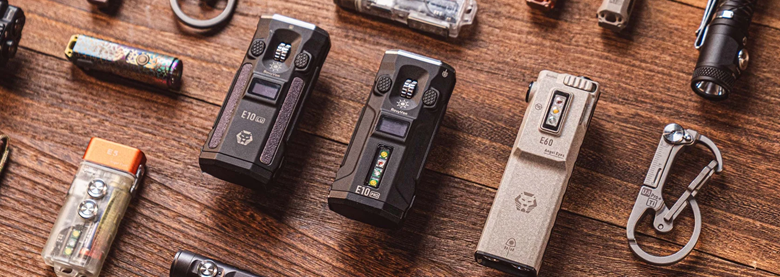
Plenty of brands sell bright, rechargeable keychain lights. RovyVon wins fans with the extras around the main beam and the small details that help you find and carry the light.
The Multi-Light Format: Main Beam Plus Side Lights
Many Aurora models carry small secondary LEDs beside the main emitter. Depending on the model, you get red, UV, white or a mix, all on the same button as the main beam.
- Red: Use it to protect your night vision. Check a map at camp or find the tent zip at 3 am, and your eyes will still adjust when you switch off.
- UV: It makes certain materials glow, so you can check the security features on Australian banknotes, find pet stains on the carpet or sweep your campsite for scorpions, which glow a bright blue-green.
- Soft white: Use it for close jobs like reading a menu or checking a fuse. You get a low, even glow without the harsh glare that bounces off a page under a focused beam.
Glow-in-the-Dark Bodies and Find-It-Fast Details
Several Aurora models come with a glow-in-the-dark (GITD) shell. Leave it under a lamp or in the sun and it glows faintly for hours afterward, so you can spot the torch in a dark tent, a bedside drawer or the bottom of a glovebox.
A 650-lumen torch is no use if you can’t find it in a dark car. Add a Firefly bead, a small titanium bead with a GITD insert, and you can spot your keys in long grass too.
An EDC Ecosystem Beyond Torches
RovyVon also makes titanium pens, multi-tools, carabiners, a tactical ring and EDC (everyday carry) knives. The Commander C10 pen carries tritium vials that glow for years with no charging, and the U4 Pro multi-tool and Pioneer P1 ring both double as bottle openers.
Most pieces share the torches’ finishes, so you can clip a RovyVon flashlight, a titanium carabiner and a multi-tool onto one ring for a matching kit. Check your state’s carry laws before you add a knife.
Inside the Aurora Line: What the Generation Numbers Mean
Each Aurora model name pairs a design code, such as A3 Pro, with a “G” tag for the version. You need both to compare listings properly.
Keychain Lights Across Four Generations
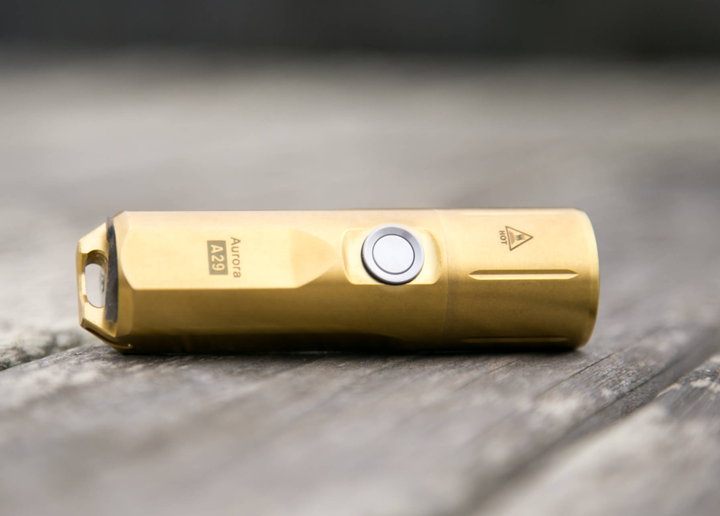
The A1, A3 Pro and A4 are all at G4 right now. The A1 has a 16.8 g plastic body, the A3 Pro uses 7075 aluminium and the A4 uses titanium. All three hit 650 lumens on their cool white LED.
The G number marks a hardware refresh. RovyVon keeps the name and swaps parts, so an A3 Pro G2 and an A3 Pro G4 charge, click and light up differently. Check the G number before you trust a review.
What Typically Changes Between Generations
Here’s what changed with the move to G4:
- Charging port: Early Aurora lights charged through micro-USB. The G4 models use USB-C, and the A3 Pro G4 adds a sturdier rubber cover over the port.
- Switch: The A1 G4 and A3 Pro G4 moved to a metal switch. You get a firmer click that lasts longer.
- Emitter and beam: The A3 Pro G4 uses a 7000K Luminus SST-20 LED. The A1 G4 lets you pick high-output cool white (650 lumens) or high-CRI neutral white (420 lumens) for truer colours.
- Battery: Capacity barely changes since the bodies are the same size. Expect 300 mAh in the A1 G4 and 330 mAh in the A3 Pro G4.
- Extras: The A3 Pro G4 tail loop now has slots for tritium vials, so you can add a permanent glow.
Is an Upgrade Worth It?
Start with the battery. Aurora keychain models use a built-in battery you can’t swap, so if your RovyVon light now runs flat after a few days of normal use, a newer generation will feel like a big step up.
Next, look at charging. If everything else you own uses USB-C and your old torch still needs micro-USB, upgrading means one less cable in your bag. A torn port cover also counts, since it lets water reach the charging contacts.
If your G3 still charges well and you mostly use the low modes, hold off. Both generations top out at 650 lumens.
Aluminium, Titanium and Limited Editions: How Materials Shape Price and Carry
Two torches with the same LED and battery can differ a lot on price. The body material, surface finish and optional extras account for most of that gap.
7075 Aluminium vs Titanium
7075 ranks among the toughest aluminium alloys, and RovyVon hard-anodises it for a scratch-resistant finish. You get a light body that draws heat away from the LED fast, so you can run high mode a little longer. Keys and coins can eventually wear the edges through to bare metal.
Titanium weighs about 60% more for the same size, though that’s only a few grams on a keychain light. It won’t corrode from salt water or sweat, so it suits beach and boat use. It moves heat more slowly, so the head can get warm on long high-mode runs. Titanium also scratches more easily, but the marks blend into a soft, worn-in look.
Why One Model Can Span a Wide Price Range
The A3 Pro G4 sells for anywhere from $59.95 to $104.95, and three options account for the spread:
- Finish: The desert tan anodised version costs the least. The MAO (micro-arc oxidation) marble grey costs more, since the process forms a ceramic-like layer that resists wear better than anodising, with a stone pattern unique to each torch.
- LED: You can pick the high-output cool white LED or a high-CRI neutral white LED for truer colours.
- Tritium vials: You can add a pair of blue or green tritium vials to the tail loop. They glow nonstop and take about 12 years to fade to half their brightness.
Choose MAO plus tritium and you land near the top of the range. You get the same 650 lumens at the base price.
Limited Editions: Collector Appeal and Everyday Use
RovyVon releases small runs with special colours, unusual MAO patterns and titanium bodies. Most share the same LED, battery and switch as the standard model, so you don’t lose any performance if you carry one.
Pocket wear will mark a limited edition within months and cut its collector value, and you can’t replace a lost one once the run sells out. If you love the look, carry it and enjoy the patina. Collectors tend to buy a standard RovyVon flashlight for daily use and keep the limited edition boxed.
Keychain, Pocket EDC or Work Light? Matching the Torch to the Task
source: zelpio.com
Pick the size for where you’ll carry it and the beam for what you need to see.
Size Classes and Their Real Jobs
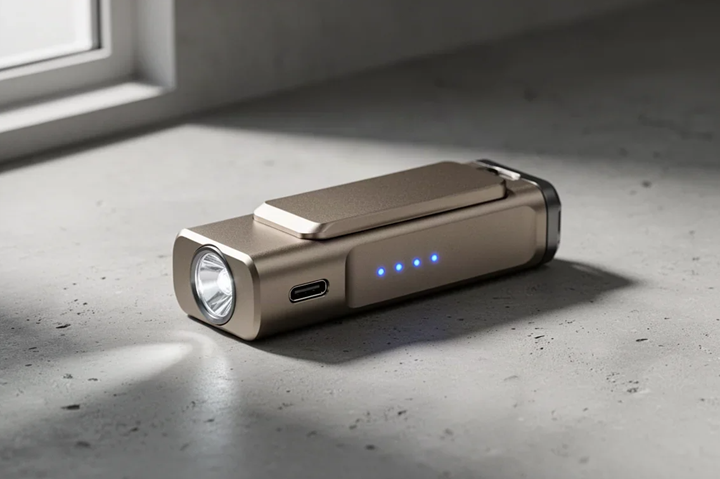
- Keychain lights: Aurora A-series models (about 60 mm, under 25 g) suit car keys, dark keyholes and late walks to the car.
- Pocket EDC torches: The A21 (1000 lumens, 46 g) and the titanium A24 carry bigger batteries for roof spaces, meter boxes and moving around camp at night.
- Work lights: With a wide beam and a magnetic base, you can stick one under the bonnet or inside a cabinet and work hands-free. Keep one in your emergency kit for blackouts.
Flood and Throw: Where a Pocket Thrower Fits
A flood beam spreads light wide to cover a room or campsite. A throw beam packs the light into a tight spot that reaches much further. The A26 (G2) uses a deep, smooth reflector to reach 180 m at 600 lumens. The A28 (G2) shares the same body size and hits 1000 lumens, but it reaches only about 150 m. Pick the A26 for spotting down a fire trail or across a paddock.
Lumen Figures in Context: Turbo, Step-Down and Sustained Output
The A1 G4 holds 650 lumens for about one minute, then steps down to 80 lumens for over an hour. The A26 runs 600 lumens for 90 seconds. This step-down protects the LED from heat damage and the battery from overwork.
Check the runtime chart for the flat part of the line after the drop, since that’s the brightness you’ll actually walk with. On a long night, 300 lumens for two hours beats a quick spike to 1000.
Charging and Care in Australian Conditions
- Heat: A parked car can top 60°C inside on a summer day, which wears out lithium batteries fast. Take the torch with you, and let a hot torch cool before charging.
- Water: IPX6 (A1, A3 Pro) covers rain and splashes. IPX8 (A26) covers a full dunk. After the beach, rinse the torch in fresh water with the port cover shut and dry it before charging.
- Sand: Brush grit off the switch and port cover before you open it, since sand wears down the seal.
- Storage: If you keep a torch in a glovebox or tackle box, charge it to around half and top it up every few months. Keep a USB-C cable in the same spot, as some models, including the A1 G4, don’t come with one.