

Safe Storage Made Simple: Your Guide to Understanding IBC Bunds
Contents
Containment That Protects People and Planet
Chemical spills are among the most common workplace hazards in industries such as agriculture, mining, manufacturing, and fuel storage. Even small leaks can contaminate soil and waterways, damage equipment, and put workers at risk.
Secondary containment systems are designed to catch these spills before they spread. By placing bulk liquid containers inside bunds, workplaces reduce the chance of environmental harm and ensure compliance with Australian Work Health and Safety (WHS) standards.
Australia’s Environmental Protection Authorities (EPAs) require businesses to have adequate spill containment measures in place. Failure to comply can result in fines, shutdowns, or liability for environmental damage. These containment systems are therefore not just a precaution; they are a legal necessity in many industries.
Your First Line of Defence

source: shop.storemasta.com.au
IBC bunds are containment systems, typically in the form of pallets but also available as trays or modular setups, designed to safely hold Intermediate Bulk Containers (IBCs). These large tanks are widely used for storing and transporting chemicals, fuels, and other hazardous liquids. The bund acts as a protective basin, capturing leaks, drips, or full spills. Most designs are sized to hold at least the volume of one IBC, ensuring that even catastrophic failures are contained.
Polyethylene bunds are lightweight and resistant to corrosive chemicals, while steel options offer fire resistance and durability against impact. Reliable IBC bunds are crucial for any site handling bulk liquids. Their design often includes forklift pockets for easy relocation, grates for stable positioning, and sump capacities that meet or exceed regulatory requirements.
Choosing Wisely: Matching Bunding to Your Needs
Selecting the right bund depends on the type of liquid stored, the environment, and compliance requirements. Poly bunds are ideal for corrosives, acids, and oxidisers because of their chemical resistance. Steel bunds, on the other hand, are better suited for flammable or combustible liquids thanks to their fire-resistant properties.
Workplace layout also matters: compact bunds fit tight spaces, while larger units accommodate multiple IBCs. Considering these factors ensures that containment systems align with both safety and operational efficiency.
Practical Gains That Keep Workplaces Safer
Beyond compliance, bunds deliver everyday benefits. They simplify spill management by reducing cleanup time and lowering the risk of fines or shutdowns. Workers gain peace of mind knowing that leaks are contained, and managers can demonstrate proactive safety measures during audits.
In industries where environmental responsibility is increasingly scrutinised, bunds also strengthen a company’s reputation by showing commitment to sustainability. Customers and regulators alike value organisations that take visible steps to protect the environment. Bunds are a straightforward way to demonstrate that responsibility without adding complexity to daily operations.
Real-world examples highlight their value: a warehouse storing agricultural chemicals can avoid costly soil remediation by using bunding, while a fuel depot can prevent fire hazards by relying on steel containment. These scenarios demonstrate how proper bunding can lead to tangible savings and safer workplaces.
Complementary Containment Options
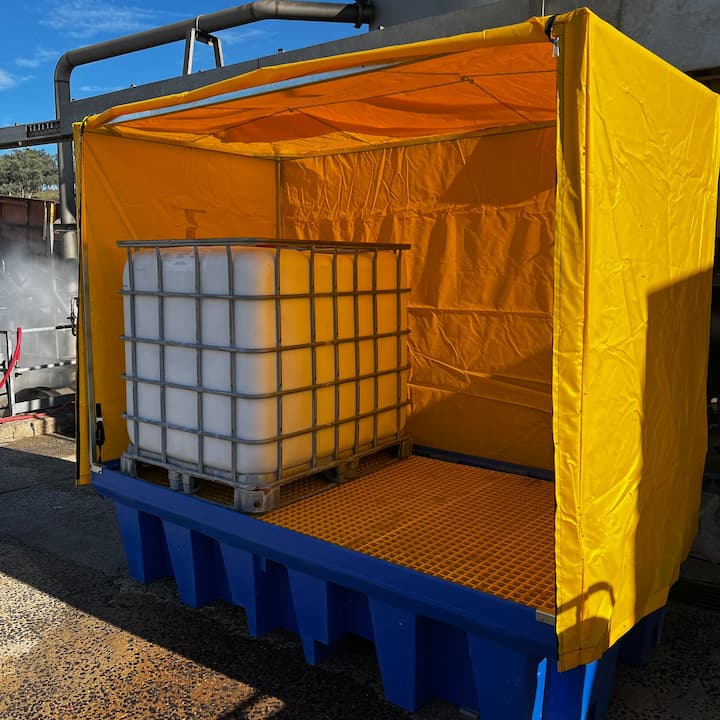
source: facebook.com
While bunds are the backbone of spill control, other solutions can enhance safety. Covers and shrouds protect IBCs from rainwater, which could otherwise fill the bund and reduce its capacity. Dispensing trays make it easy to transfer liquids safely and prevent drips. Modular bunds can be nested or moved easily, making them suitable for sites with changing layouts.
These complementary tools ensure that bunds perform at their best under varied conditions. For example, outdoor sites benefit from bunding with weather protection, while high-traffic warehouses may prefer modular units that can be repositioned quickly.
Tips That Keep Safety on Track
To maximise effectiveness, these containment systems should be inspected regularly for cracks, corrosion, or blockages in drainage points. Containers must be positioned correctly so that spills flow into the bund rather than outside it. Covers should be used in outdoor settings to prevent rainwater accumulation, and bunds should never be overfilled with multiple IBCs beyond their rated capacity.
Training staff to recognise bunding limitations and maintain them properly ensures long-term reliability. A bund is only as effective as the practices surrounding it, so consistent monitoring and upkeep are essential. Regular refresher training also helps workers stay confident in safely handling hazardous liquids.
Safety Is the Best Investment
Spill containment is not just about meeting regulations; it’s about protecting workers, communities, and the environment. Investing in bunding reduces risks, saves money on potential fines, and builds trust with stakeholders. Whether handling corrosives, flammables, or everyday industrial liquids, bunds provide a simple yet powerful layer of defence.
By choosing wisely and maintaining the IBC bund properly, workplaces can turn a potential hazard into a managed routine, ensuring that safety remains a daily priority. Bunds are not an optional extra; they are a cornerstone of responsible operations. Their role in modern industry is both practical and ethical, making them one of the smartest investments a workplace can make.


