Performance Exhausts: The Ultimate Upgrade for Your Ride
For car enthusiasts, there’s always the itch to upgrade. If you’re not splurging on a new car with all the boosted performance parameters you’d expect, upgrading your current ride is the next best step. And here there are tons of options, ranging from engine power upgrades, simple yet effective ECU tunes, or tending to basics like improved airflow with aftermarket exhausts and better handling with a decent set of alloys. Simple tweaks that will save you a nice sum without forgoing the fun factor of a car that’s a hoot to drive.
What Qualifies as a Performance Exhaust?

source: pinterest.com
Stock systems might be adequate without any engine mods, but if you’re thinking about more power, then these are the first parts to see a makeover. Their limitations range from narrower tubing, multiple bends and subpar mild steel that will struggle with the extra heat and pressure when engines are pushed towards redlines. Excessive backpressure, rust and rupturing are all too common in modded cars with the factory exhaust left untouched.
To let the engine breathe, a performance exhaust goes with revised layouts to ease airflow out of the car, and let the powerplant go about its business of burning fuel and air. Straighter and wider tubing pushes spent gases out faster. Moreover, tougher stainless steel handles the heat and pressure of boosted power without kinking, staining or leaking. And updated parts like downpipes, high-flow cats and modified mufflers tune the exhaust sound to match that of the engine, without encroaching on strict emissions and noise regulations.
In short, engineered performance exhausts extract more power, sing a happier tune, and throw durability in the mix for a vehicle upgrade that’s suited to both everyday and more spirited driving.
Why Have One on Your Car?
As one of the first upgrades in stage tuning, a performance exhaust system provides multiple benefits:
- Increased power and torque: The extra realty space in an aftermarket system helps to reduce backpressure (or lingering gases restricting subsequent combustion cycles), improves exhaust velocity (the speed fumes exit the tips) and has a say in scavenging (or the pulsating effect drawing combusted fuel and air mixtures out from cylinders). Longer and wider header and downpipes, less restrictive catalytic converters and mufflers, and straighter mid and tail pipes all contribute to added power. Conservative estimates are between 5 and 10 per cent of the overall rated power, or 20-odd horsepower for the average vehicle. Besides top-end power, vehicles pull harder from a standstill with increased low-end torque.
- Durability: Entry-level performance exhausts use high-grade 304 or 409 stainless steel as the main ingredient. This has higher tensile strength, is more resistant to corrosion, and has a higher melting point than mild steel in factory exhausts. It is also mandrel-bent to ensure uniform diameters throughout its length – a prerequisite for consistent airflow. For enthusiasts who want more, and when price isn’t an issue, exotic materials like super-tough nickel alloys, lightweight titanium and durable and heat-resistant carbon fibre skim kilos off the entire assembly while ensuring it aptly handles serious power mods.
- Sound profiles: improved airflow means a deeper and louder exhaust note. This can be further tuned with proprietary designs, such as muffler valving and butterfly valves that regulate airflow according to engine loads. Simpler changes, like chambered or straight-through mufflers or high-flow converters, also alter the sound. Car owners have multiple options here, including street-legal setups or exhaust layouts tuned specifically for track use.
- Customisation: A key advantage of a performance exhaust is the modular design. Parts can be mixed and matched according to expected performance parameters, with accessories like clamps and exhaust doughnuts wavering the need for welding. This ensures that exhausts can be configured easily and parts swapped out quickly when needs change.
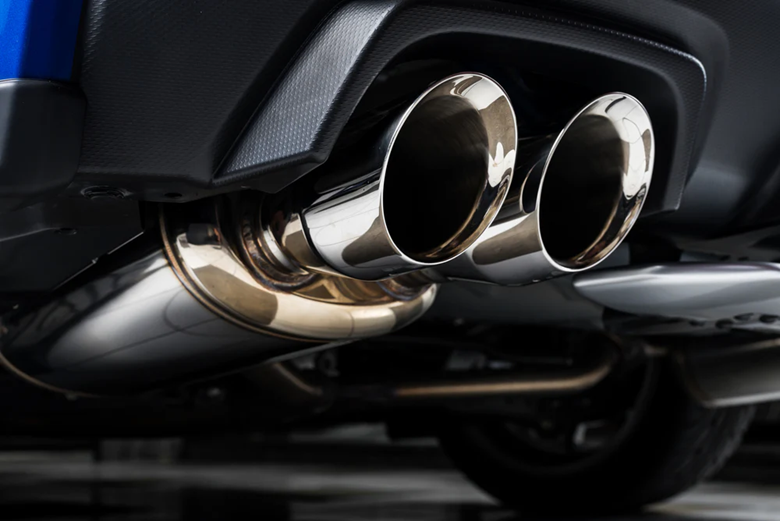
- Aesthetics: Polished chrome, matte black, titanium blue, and carbon-look finishes (specifically in the tips) draw more attention from bystanders and other motorists. The additional coatings and heat treatment also provide another layer of longevity. Revised layouts, like X- and H-pipes, twin or quad tips and smoother downpipes will also grant approval from anyone in the know.
Key Buying Factors
Vehicle compatibility, pipe widths and brands are the key considerations if you’re intent on a performance exhaust system. Compatibility means parts and exhaust setups are tuned specifically for the engine and vehicle, regarding details like cylinder count and layout (single vs dual exhausts), fuel type (petrol vs diesel – the latter requiring additional DPFs) and aspirated or forced induction engines, with changes to headers and downpipes. Manufacturers have made buying easier by marketing complete systems and parts for particular vehicle models. This also takes out the guesswork in installation.
Pipe widths are generally half an inch wider than the stock setup. 2.5″ and 3″ systems are the most common, and provide enough space for freer airflow, without completely cutting backpressure needed to spool turbines.
Lastly, consider brands. Most aftermarket names start with strengthened stainless steel in basic lines, and move up the material ladder with tougher and lighter materials in higher-priced options. Look for exhaust brands with extensive building experience, those that have ties with competition racing teams, and use contemporary production methods or proprietary technologies to get more out of the exhaust and your car.