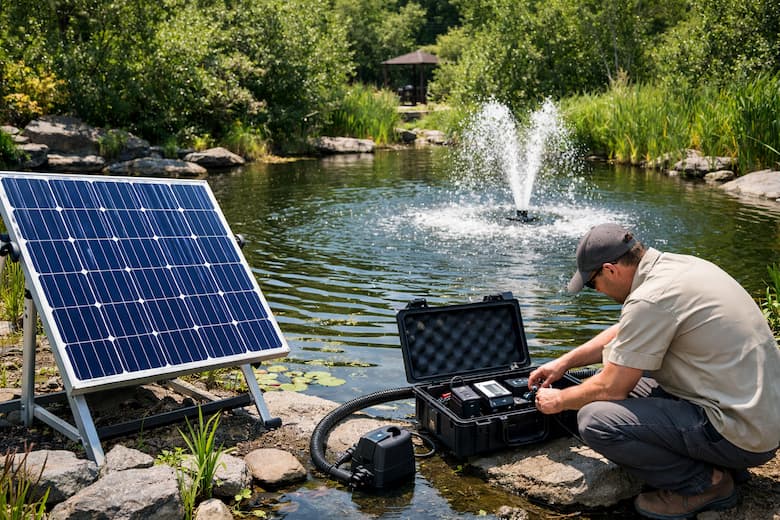
Harnessing the Sun: Choosing the Right Solar Pumps for Your Pond
Contents
A Greener Flow
Ponds bring calm and character to outdoor spaces, but stagnant water can quickly lead to algae, unpleasant odours, and unhealthy conditions for fish and plants. Traditionally, electric pumps have been used to keep water moving, yet they come with drawbacks: higher energy costs, complex wiring, and environmental impact.
Solar‑powered pumps, however, offer a cleaner, simpler alternative. By harnessing sunlight, they provide reliable circulation without ongoing electricity bills, making them a smart choice for households seeking sustainability and convenience.
Why Solar Pumps Then?
source: poposoapsolar.com
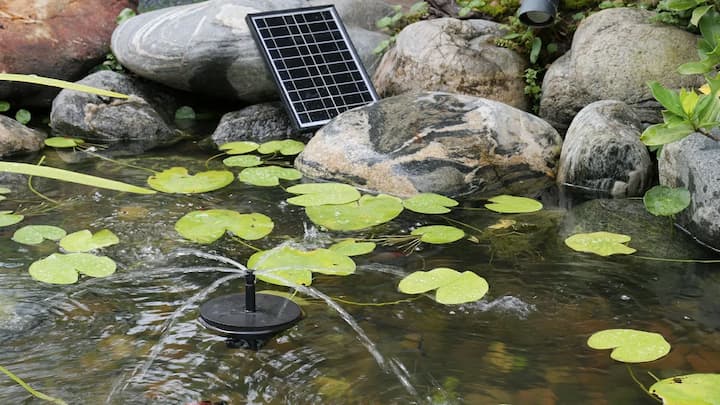
The solar pumps are more than just energy‑saving devices. They reduce household reliance on mains power, cut greenhouse gas emissions, and eliminate the need for hazardous cables near water. This makes them safer for families with pets or children. They also support healthier ecosystems.
Constant water movement prevents algae blooms, oxygenates the pond, and creates a balanced environment for aquatic life. For gardeners, this means less maintenance and more enjoyment of a thriving pond. That’s why investing in own solar pumps designed to match the size and needs of your pond will ensure steady water circulation, healthier plants, and a more balanced ecosystem throughout the year.
Choosing the Right Fit
Every pond has unique needs, and selecting the right solar pond pump depends on water volume, depth, and the type of feature you want to run. Smaller ponds may only require compact units, while larger ponds benefit from stronger flow rates and higher wattage panels.
Battery backup systems ensure circulation continues during cloudy weather or at night. Floating pumps provide flexibility in positioning, while fixed units offer stability. Considering these factors helps ensure your pond remains healthy throughout the year.
How Far Solar Pumps Push Water
Lift height varies widely by design:
- Small garden or pond solar pump designs typically lift water 1-3 metres, which is enough for circulation, fountains, or small waterfalls.
- Mid‑range systems can push water up to 5-6 metres, suitable for larger ponds or multi‑tiered features.
- High‑capacity solar pumps (often used in agriculture or wells) can raise water 200-300 metres depending on total dynamic head (TDH), panel wattage, and pump design.
- Extreme cases: Some specialised solar-powered pumps can lift water as high as 300 metres or more, but these are engineered for irrigation or deep wells rather than decorative ponds.
Why This Matters for Ponds:
- Circulation efficiency: For most backyard ponds, a pump that lifts water 1–3 metres is sufficient to keep water oxygenated and moving.
- Feature design: If you plan waterfalls or elevated streams, you’ll need to match pump lift capacity to the height of the feature.
- Sizing correctly: Choosing a pump with too little lift means weak flow, while oversizing wastes energy and may disturb pond balance.
Enhancing Your Pond Setup
Accessories can elevate functionality. Extension cables allow panels to be positioned in sunnier spots, maximising energy capture. Backup boxes store excess energy, keeping pumps running during overcast conditions or at night. Aerators and feeders can also be integrated, supporting fish health and plant growth. These additions transform a basic pump into a complete pond management system, ensuring reliability and convenience across different seasons.
Tips for Long‑Term Success
source: poposoapsolar.com
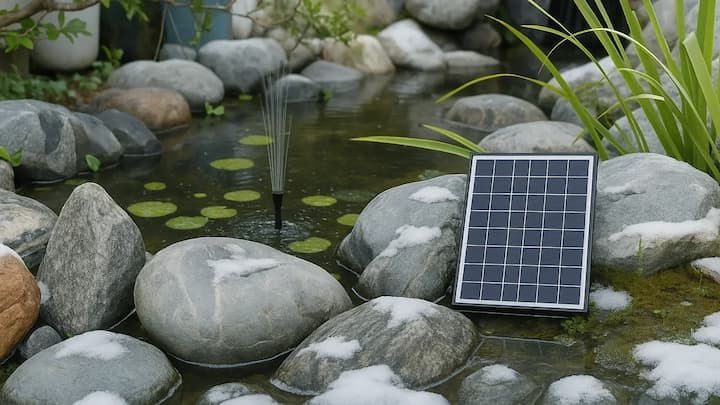
Maintaining solar pumps is straightforward but essential for longevity. Follow these practical steps to keep your system running smoothly:
- Clean panels regularly to remove dust, leaves, or bird droppings that block sunlight.
- Check connections to ensure cables and plugs remain secure and free from corrosion.
- Position panels strategically by adjusting angles seasonally for maximum exposure.
- Inspect the pump for debris or blockages that restrict water flow.
- Replace worn parts such as filters or tubing to maintain efficiency.
- Monitor water quality to prevent algae growth and ensure oxygen levels remain stable.
- Test flow rates periodically to confirm the pump is circulating water effectively.
- Shield panels from shade by trimming nearby plants or repositioning them.
- Document maintenance routines to track performance and anticipate replacements.
Expanding the Benefits
Solar pumps aren’t limited to ponds alone. They can be used in birdbaths, small fountains, or garden water features, adding movement and sound to outdoor spaces. Their portability makes them ideal for temporary installations, such as seasonal displays or events.
They also contribute to broader sustainability goals. By reducing reliance on fossil fuels, they align with eco‑friendly living practices. For households aiming to cut energy costs and environmental impact, they represent a practical step towards greener choices. Another advantage is resilience. In areas prone to power outages, solar systems continue to operate independently, ensuring ponds remain healthy even when the grid is down. This reliability makes them valuable for both urban and rural settings.
Finally, they encourage biodiversity. Flowing water attracts birds, insects, and other wildlife, enriching the garden ecosystem. A well‑maintained pond becomes not only a visual centrepiece but also a thriving habitat that supports local species. Over time, this creates a micro‑environment that blends aesthetics with ecological value, turning a simple backyard pond into a living sanctuary.
Flowing Forward
Solar‑powered pond solutions combine sustainability with practicality. They reduce costs, simplify installation, and support healthier aquatic environments. By choosing wisely and maintaining them properly, you’ll enjoy clear, circulating water powered entirely by the sun. It’s a smart step towards greener living and a more vibrant outdoor space.