CNC Fiber Laser Machine: A Beneficial Plant Equipment Investment
Contents
Modern metal manufacturers and fabricators understand that in order to stay competitive, they have to be able to work quickly and precisely. Choosing to invest in CNC plant equipment is the smart way to successfully meet those goals. There’s no guarantee, though, that such a major investment in plant equipment will actually align with the business’s financial objectives.
CNC milling machines, automated lathes and other cutting equipment are efficient but expensive – and depending on how specialised they are, the investment can potentially require years to reach a break-even point. That’s why it behooves fabricators to only consider investing in CNC equipment that offers maximum versatility. This is where the advantages of fiber laser CNCs come to the forefront.
Increasing Industrial Efficiency and Versatility With CNC Fiber Lasers
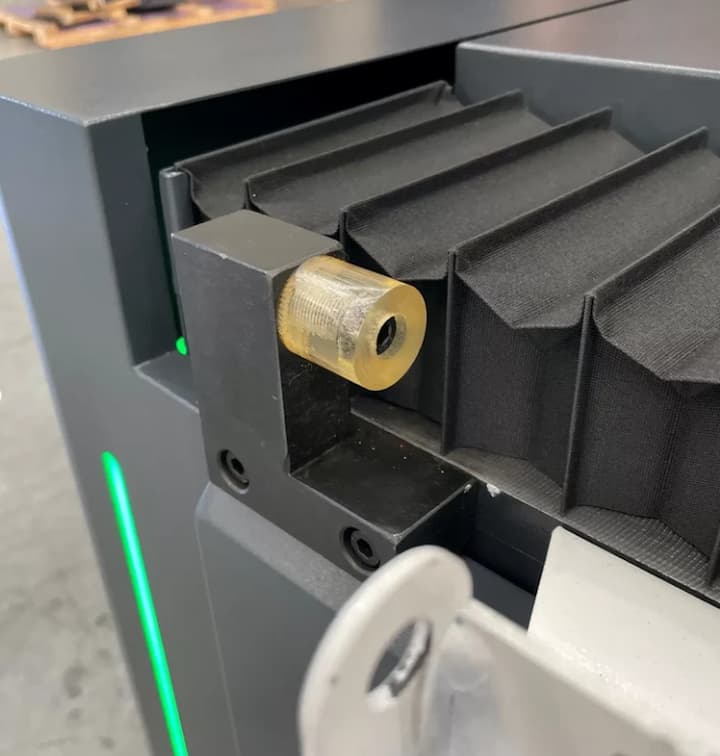
source: assetplant.com.au
Let’s be honest: even while CNC automation has revolutionised the way all types of machine parts and subparts are designed and engineered, the cost of commercial-grade CNC production equipment continues to trend upward. The fact, however, is that as businesses look at ways to balance cost with increasing competitiveness, and the advantages of industrial CNC fiber laser machine cutters are hard to ignore.
Unlike sealed-tube C02, or high voltage plasma-type laser cutters, high frequency fiber CNC laser cutters are doped (infused) with the rare earth element Ytterbium. Ytterbium’s superior efficiency and thermal properties are the perfect choice for variable pulse lasers which, when beamed through solid state fiber optic cables, are ideal for carrying out the following industrial processes:
- High speed metal cutting. Ytterbium-doped CNC fiber laser cutters excel at performing intricate, burr-free cuts into all types of thin-to-medium thickness ferrous and non-ferrous metals including hardened carbon and stainless steels, aluminium, copper and even titanium.
- Precision alloy welding. As fiber lasers are infinitely better at concentrating heat into a tighter heat affected zone (HAZ) than other thermal fusion processes, their high speed beams are excellent for precise, high-powered seam joining and welding with minimal heat transmission outside the working area.
- Inscribing and engraving. A CNC fiber laser’s tight HAZ makes it the perfect choice for permanently inscribing and engraving part and serial numbers, bar and QR codes, and even logos onto metal tools and parts with unmatched accuracy and clarity.
With their advanced programming, precision and high speed efficiency, fiber laser CNC machine setups allow businesses to transition away from a host of traditional metalworking processes that are considerably less efficient.
And because the beam, pulse rate and the heat generated by fiber lasers are precision controlled, they can even be used to vaporize (ablate) surface rust, paint and scale from delicate metals parts without warping or damaging the metal itself, thereby adding a new capability to a business’s profile that might not have been possible otherwise.
Letting Speed and Technology Give CNC Fiber Lasers the Advantage
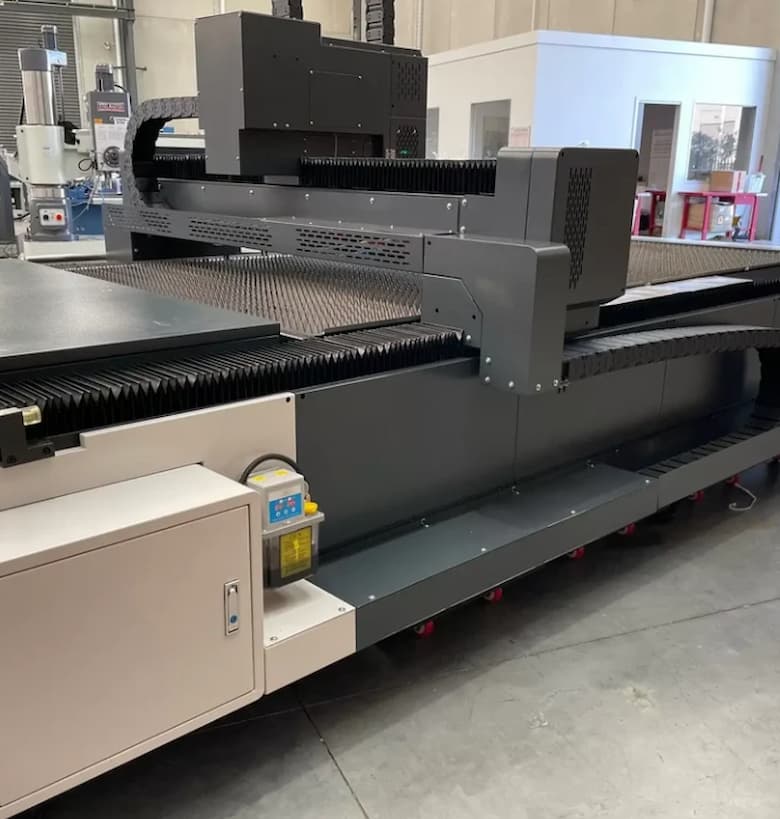
Make no mistake: with many of the most impressive industrial-level CNC fiber laser cutting machine setups boasting cutting capacities of 1500mm x 3000mm, they’re not just some of the most versatile plant equipment on the market, they’re also among the fastest and most sophisticated.
And with workflow throughput easily qualifying as the most crucial operational attribute for any CNC fiber laser cutter, their average cutting speeds are more than impressive when compared to C02 lasers, plasma lasers and even oxy torches when processing any of the following materials.
- Hardened and high carbon steel, 14mm thick, 0.6 – 0.7m per minute.
- Chrome-moly and stainless steel, 6mm thick, 0.6 – 0.8m per minute.
- Aluminium and titanel alloys, 4mm thick, 1.4 – 1.6m per minute.
- Brass, bronze or copper alloys, 4mm thick, 0.5m – 1.0m per minute.
And when it comes to technological integration, fiber laser CNC cutting machine setups typically boast the following features as standard:
- CNC Control units with MS Windows-based software and web interface;
- Uncomplicated data entry via ADH interface with look ahead function and programmable memory;
- Full auto cutting from any CAD/CAM drawing that can be imported via network controller or USB;
- High speed sprint-cut functionality that chooses the shortest path for cutting head between contours; and,
- Auto nesting for optimisation of material and fast cutting head anti-collision protection.
Typical positioning accuracies of +- 0.03mm and repeatable positioning of +- 0.02mm also helps ensure that fiber CNC lasers are able to maintain noticeably more consistent and accurate cuts than other types of lasers, especially when processing multi-pass, or high piece-count runs. And as CNC lasers don’t require the gas refills or mirror alignments that other industrial lasers do, they also enjoy substantially longer periods of maintenance-free operation.
Choosing Accessories That Help Maximise CNC Fiber Laser Performance
The feasibility of purchasing productivity-based accessories is another crucial aspect of investing in a CNC fiber laser that businesses have to consider. Tight production schedules and even tighter product tolerances demand maximum performance from all of their operations, and semi-automated fiber laser accessories are the key to making these already efficient machines even more productive.
A proper selection of CNC fiber laser machine accessories can allow businesses to verifiably increase their workflows and repeatable throughputs while also improving operator health protections, with the most essential accessories including:
- Screw air compressors. High velocity screw compressors are designed to supplement a laser’s own compressed air supply with a supplemental source of continuous high pressure air, ensuring effective removal of molten debris from the laser’s cutting path (kerf), cooling the working area around the cutting path and preventing debris from building up on the laser’s cutting head.
- Feeder decoilers. Decoilers are specialised upstream machines that are designed to feed flattened and straightened out coil stock to production line machines like lasers. Ideally, not only do decoilers ensure a continuous feed of coil stock for processing, they also reduce the need for machine operators and material handlers to physically handle debilitatingly heavy coil rolls.
- Fume extractors. Fume extractors are dual-purpose accessories. While their primary function is the removal and filtration of hazardous fumes and toxic particles from the working area, they also prevent dust and fumes from accumulating on sensitive laser lenses and other components, reducing the likelihood of optical interference and the need for costly downtime due to cleaning and unscheduled maintenance.
Ideally, businesses are best able to manage their capital costs by bundling the most crucial CNC laser accessories with the laser at the point of purchase. It’s an approach that guarantees both the best pricing on any CNC fiber laser for sale, along with complete assurance of quality and compatibility direct from the seller.
The Final Word
At the end of the day, in an industry where sometimes a window of only a few hours may be all that’s available to manufacture or rework an entire product run, fabrication businesses understand just how important speed and precision are to their existence. That’s why more than ever, they’re turning to plant equipment that can give them the edge in efficiency that they need to remain competitive.
Speed industrial CNC fiber laser machine cutters provide all the advantages they need to stay ahead of the competition. It’s a major investment in plant equipment, but it’s one with the capacity to expand a business’s workflow and throughput many times over.