

What to Look for When Buying Baby Socks
Contents
Buying baby socks sounds like one of those quick, no-stress errands until you try to do it. Suddenly, you’re staring at endless options and wondering how something so tiny can come with so many decisions. Fabrics, stretch, grip, height, seams, who knew socks could be this complicated? These garments need to stay on, feel comfortable against sensitive skin, and keep little feet warm without overheating. Knowing what to prioritise when shopping can save you time, money, and a lot of mismatched socks.
Materials

source: woollykins.com.au
It’s easy to get distracted by adorable prints and tiny details. But before you fall in love with the design, look at the label. The fabric blend is one of the most important things to consider. Many organic infant socks aren’t made from just one fibre. Even if you see “cotton socks” on the packaging, they’ll usually contain a small percentage of stretchy material like spandex or Lycra. That little bit of elastic helps the garments stay snug and keeps them from slipping off those constantly kicking feet.
Babies’ feet are also unique. They help regulate body temperature, so keeping them comfortably warm is key. While adults need socks that focus heavily on moisture-wicking because of sweat, babies benefit more from softness, warmth, and gentle breathability. Here’s a closer look at common materials and what they offer.
Merino Wool
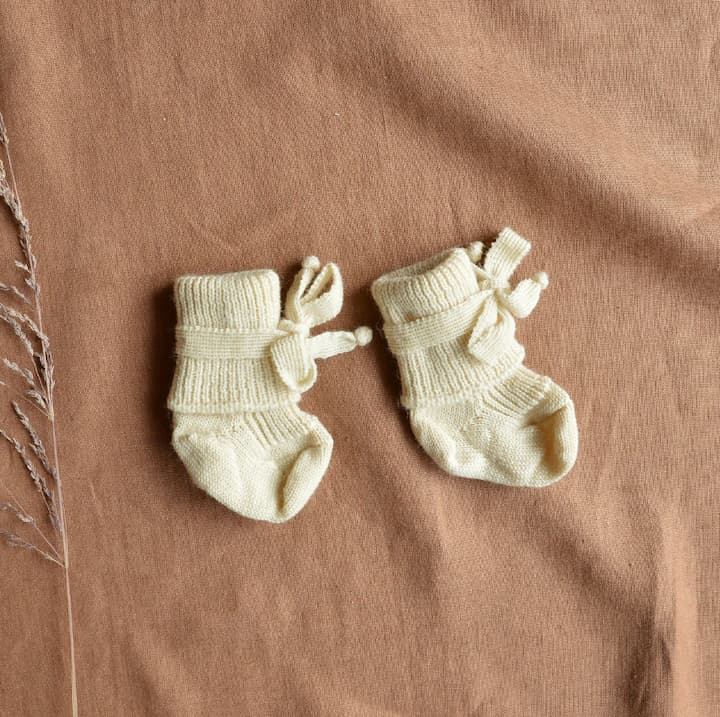
This might sound like something reserved for freezing winter days, but organic baby socks made of 100% natural materials (such as merino wool) are surprisingly versatile. It’s soft, lightweight, and breathable, which means that it’s suitable for different seasons. Unlike traditional wool, merino doesn’t feel scratchy. It naturally helps regulate temperature, keeping little feet warm without overheating. It’s a great option for toddlers who are always on the move.
Cotton
Organic kids socks made of cotton are also popular. They’re natural, breathable, and budget-friendly. Many parents gravitate toward cotton because it feels familiar and gentle on sensitive skin. It helps keep their little feet warm without overheating, which can help babies sleep better. If you’re choosing cotton, pay attention to the yarn quality. Finer yarns typically feel smoother and softer. Organic cotton is also worth considering since it’s grown without synthetic pesticides and fertilisers, making it a more eco-conscious option.
Azlon (Soy Fibre)
Sometimes called soybean protein fibre, azlon is made from the leftover pulp created during tofu or soymilk production. It’s a plant-based, sustainable material that has gained attention in baby clothing. The fibre structure allows for good airflow and moisture absorption, helping feet stay dry and cosy. It also has a smooth, almost silky feel and retains warmth in a way that’s comparable to wool.
Nylon
Nylon usually appears as part of a blend rather than the main fabric. It adds durability and helps garments hold their shape. It also dries relatively quickly, which is helpful after washing. You’ll often see nylon making up a moderate percentage of the overall fabric content.
Elastane, Spandex, or Lycra
These stretchy fibres are added in small amounts, but they’re essential. They give organic baby socks flexibility and help them stay securely on tiny ankles. Even a few percent make a big difference. Higher-quality elastic fibres will maintain their stretch over time, while lower-quality versions can lose shape and cause the garments to sag or slip off.
Construction
source: woollykins.com.au
Тhe little construction details matter far more than most people realise. Two of the biggest things to pay attention to are the toe seam and the way the top of the sock is finished. They might seem minor, but for tiny, sensitive feet, they make a big difference.
Organic kids socks are knitted in a tube first, and then the toe is closed with a seam. With standard machine-linked seams, the join can feel slightly raised or bulky. On an adult sock, you might not think twice about it, but on a baby, that extra ridge can rub against delicate toes and cause irritation. So, which socks are good for kids who don’t like seams? Many designs use hand-linked flat seams instead. These are much smoother and sit neatly within the cushioning of the sock, making them barely noticeable when worn. It’s always worth turning the sock inside out in the shop and running your fingers across the seam to check how it feels.
The top closure is just as important. A well-made cuff should hold the garment in place without digging into your baby’s skin. Double ribbed cuffs tend to offer better support and shape. They stay secure without needing to be overly tight. The goal is simple: garments that stay on comfortably, without leaving little red marks behind.
Style
-Ankle socks sit right at the ankle. They offer light coverage and a barely-there feel. They’re great for warmer days or when your little one is mostly indoors. Because they’re shorter and cover less of the leg, they can sometimes slip off more easily.
-Crew styles fall somewhere between ankle and knee length, usually stopping below the calf. These newborn wool socks are popular options because they strike a nice balance between comfort and coverage. They stay on better than ankle styles and work well with everything from soft booties to little trainers.
-Knee-high styles reach up to just below the knee and provide the most warmth. They’re perfect for cooler weather and pair beautifully with boots or dress shoes. Many knee-high styles are made with stronger knitting around the leg to help prevent them from sliding down.
Hopefully, this gives you a clearer idea of what to look for when choosing baby socks that are soft, secure, and made to last. It’s always tempting to grab a multipack and call it a day, but when it comes to baby essentials, quality matters more than quantity. Well-made garments with the right materials and thoughtful construction can stay in shape for years, often long enough to pass down to a younger sibling. In the long run, investing in fewer, better pairs can save you money.


